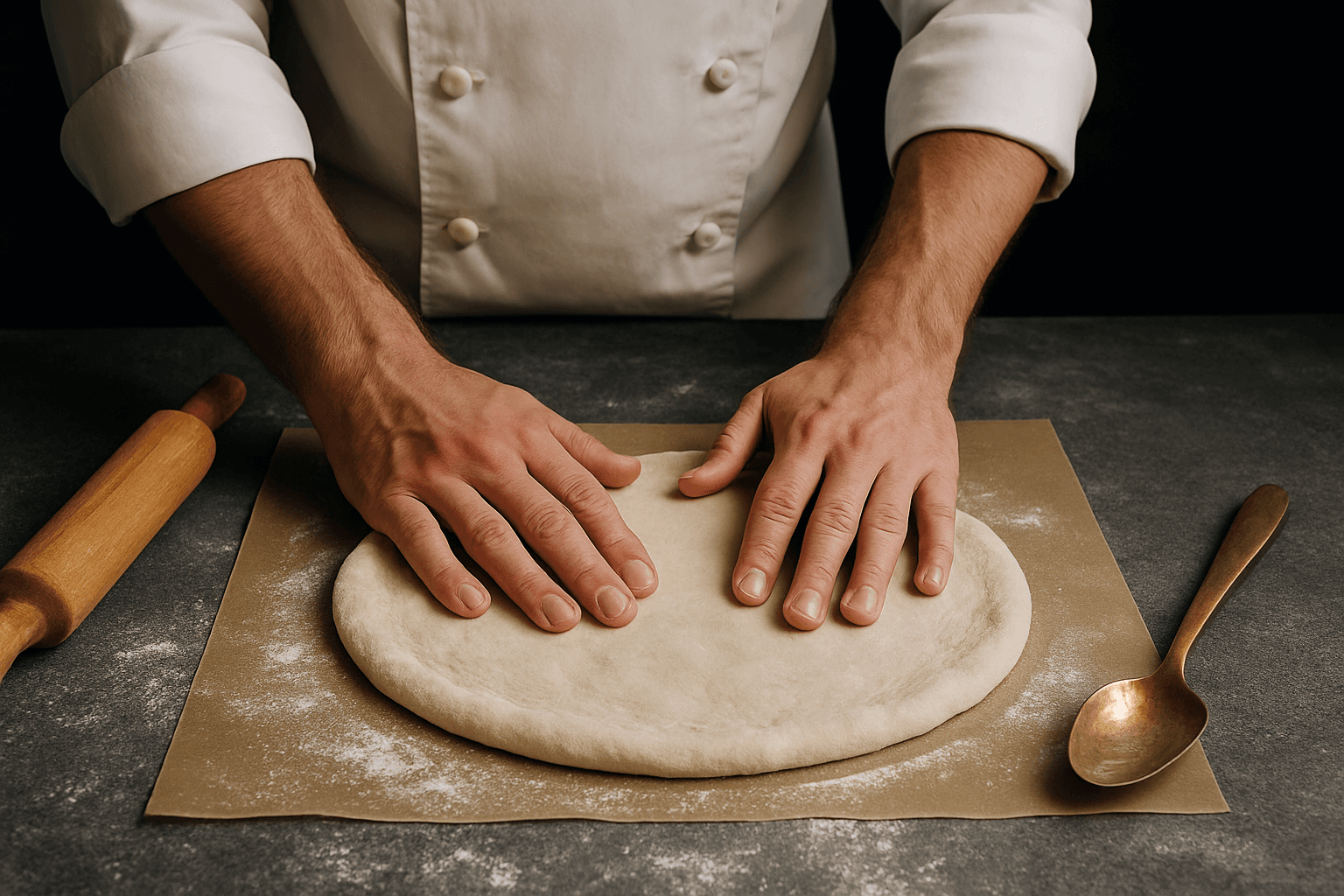
At La Fornara, every pizza begins with our hand-kneaded dough—a process that has remained unchanged since we opened in Amalfi in 1987. This traditional method isn't just about technique; it's about understanding the dough, feeling its texture, sensing its temperature, and knowing instinctively when it's ready. It's a craft passed down through generations of Italian pizza makers, and it's the foundation of everything we do.
Why Hand-Kneading Matters
In an age of automation, hand-kneading might seem like an unnecessary luxury. But for authentic Neapolitan pizza, it's non-negotiable. Hand-kneading develops gluten naturally and gradually, creating the perfect texture that machines simply cannot replicate. Unlike machine mixing, which can be aggressive and uniform, hand-kneading allows our pizza makers to feel the dough's consistency, adjust pressure and technique as needed, and respond to subtle changes in the dough's behavior.
Our dough is kneaded for 10-15 minutes, a rhythmic process where the proteins form a strong, elastic network. During this time, our pizza makers develop an intimate connection with the dough—they can feel when the gluten strands begin to align, when the texture becomes smooth and supple, when it's ready to rest. This tactile relationship is something that can't be measured by timers or thermometers; it's a skill honed over years of practice.
The Ingredients: A Foundation of Quality
We start with Italian 00 flour, the finest grade available. This flour, milled to an extremely fine texture, creates the soft, delicate crumb that Neapolitan pizza is famous for. We use Caputo flour, specifically milled in Naples, ensuring authenticity in every grain. The flour is combined with water from Campania's natural springs, sea salt from Sicilian salt pans, and fresh yeast—never dried, always fresh, ensuring the most active fermentation.
The water temperature is crucial—it must be exactly right to activate the yeast without killing it. Our pizza makers check the water temperature by hand, a skill passed down through generations. Too cold, and the yeast won't activate; too hot, and it will die. The perfect temperature varies by season, by humidity, by the flour's moisture content—it's a constant dance of adjustment and intuition.
The Process: A Dance of Tradition
The ingredients are mixed gently in a large wooden bowl, then transferred to a marble work surface—marble stays cool, preventing the dough from overheating during kneading. The kneading begins: a rhythmic push and fold, turn and press. The motion is almost meditative, a steady cadence that builds gluten structure naturally.
As the dough is kneaded, it transforms from a shaggy, sticky mass into a smooth, elastic ball. The pizza maker can feel the change—the dough becomes less sticky, more cohesive, with a springy quality that signals proper gluten development. This process develops the gluten structure naturally, creating the characteristic airy, light crust that Neapolitan pizza is known for. The crust should be delicate enough to fold in half (the "pizza portafoglio" fold), yet strong enough to support the toppings.
Fermentation: The Magic of Time
After kneading, our dough ferments for 24-48 hours at controlled temperatures between 4-6°C (39-43°F). This slow, cold fermentation is where the magic happens. Enzymes break down complex starches into simpler sugars, creating the food that yeast feeds on. This process develops complex flavors—hints of nuttiness, subtle sweetness, and that characteristic tang that makes Neapolitan pizza unforgettable.
The long fermentation also creates the characteristic airy, light crust. As the yeast produces carbon dioxide, tiny bubbles form throughout the dough. These bubbles expand during baking, creating the large, irregular holes that Neapolitan pizza is famous for. The crust should be crisp on the outside, soft and chewy on the inside, with a slight char from the wood-fired oven—the "leoparding" that signals perfect baking.
The Art of Shaping
When it's time to make a pizza, the dough ball is carefully removed from the fermentation container. Our pizza makers use a technique called "stretching," never rolling. Rolling would crush the delicate air bubbles that took 48 hours to develop. Instead, the dough is gently stretched by hand, using gravity and the fingers to create a thin center with a thicker rim—the "cornicione."
This rim is crucial—it's where the most complex flavors develop during baking. The cornicione should be puffy and airy, with large bubbles visible. It's the hallmark of authentic Neapolitan pizza, and it's impossible to achieve without proper hand-kneading and fermentation.
A Testament to Tradition
This traditional method is at the heart of what makes La Fornara's pizza authentic. Every pizza we serve is a testament to the craft and tradition that began in Amalfi in 1987 and continues today in Naples. It's a process that can't be rushed, automated, or simplified—it requires time, patience, and a deep understanding of the craft.
When you bite into a La Fornara pizza, you're tasting the result of 48 hours of careful fermentation, the skill of hands that have kneaded thousands of doughs, and a tradition that spans generations. It's not just pizza—it's a piece of Italian culinary history, preserved and perfected through the art of hand-kneading.